
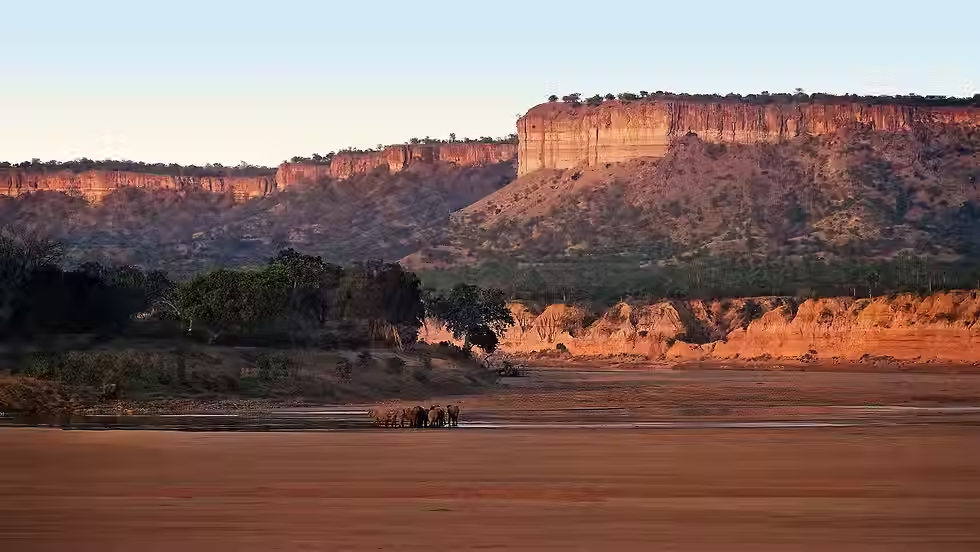

"Place of Elephants"
Gonarezhou covers just over 5,000 km² in the south-east corner of Zimbabwe. It is the country's second-largest national park and part of the Great Limpopo Transfrontier Park, which links it to South Africa's Kruger and Mozambique's Limpopo National Park. Together they make up one of the largest conservation areas in the world.
It is a real wilderness. There are few other vehicles, the scenery is huge, and the wildlife is varied and plentiful. That is why it suits guests who want space, time and something different from the busier parks.
Black rhino were reintroduced in 2021 and the park is becoming an important stronghold for them.
Across the park there are more than 400 bird species, around 90 mammal species and about 50 fish species, including the small killifish that lives only in seasonal pans in this part of Africa.

Types of Accomodation
When embarking on a safari in Zimbabwe, you'll discover a variety of camping accommodations, so it's essential to determine which type best fits your preferences and needs.
Just a few examples
We don't own or run camps in Gonarezhou. We work with the camp operators and teams on the ground, and arrange the stay that suits your guests. These are the main styles we use.

Star Beds
Two raised sleeping platforms, at Bhenji Weir, Malugwe Pan and Gorwe Pan, for up to four people to sleep under the stars above a seasonal water point. Usually one night, longer if wanted.

Seasonal Tented Camps
These are camps that have nice large walk-in safari tents and are set up in a particular area for a season. Often this is weather related or to do with a specific event like the Wildebeest Migration in the Serengeti System. The whole camp is designed to be broken down and reassembled again in a new location, so they don’t have the same level of infrastructure as your semi-permanent camps. However, in today’s world of safari camps they will generally have plumbed in facilities which includes a flushing loo and some would even have plumbed in showers but often these will be the hoisted bucket type shower. The dining area will also be tented with a nearby fireplace for those cold nights and starry skies. These camps are generally never more than 6 tents per camp.

Semi-permanent camps
This style of camp is designed around the principal that the camp can be taken down and will in theory leave very little evidence of it ever being there. Most of these camps are on wooden platforms that are thatched and then with nice large walk in tents underneath that have en-suite facilities, for many of these you would battle to see the difference between this and a camp made with bricks and mortar and they are for the most part very comfortable and spacious.

Fly Camping
Participatory safari camps requires you to get involved with some of the basic camp chores and even sometimes putting up the tents, it's a great fun way to do the safari and is generally used when doing a backpacking safari, a canoe safari or an overland driving safari. Some safaris may include a night out "fly-camping" this is generally the style of camp that would be used for this.

Luxury Lodges
Luxury Lodges are generally constructed using bricks and have either thatch or metal roofs and would have a main central dining room and bar with a pool area, probably a spa/gym facility. The rooms in most cases would be separate buildings away from the main complex and typically have private views with their own balconies. They would be air conditioned and have bath, shower and toilet en-suite and sometimes this is duplicated outside the room for that private bath under the stars. The catering is of a very high standard and most diets will be catered for if notice is given of this.
WHEN TO GO
Dry Season, May to November.
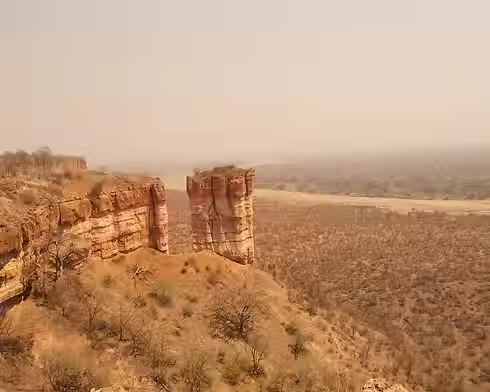
The bush thins out, visibility improves and animals gather around the main rivers and bigger pans. October and November can be very hot, but the first rains arrive then and the change in the landscape is worth seeing.

WHEN TO GO
Green Season, December to April.
Many parts of the park can't be reached, but there are baby animals, migrant birds, full pans and lush bush, and far fewer people. Good for guests with wider interests.

Getting There
private transfer from Harare or Bulawayo.
By Road:
By Air:
Charter flights from Harare, Bulawayo, Hwange or Victoria Falls.
Self Drive:
We meet guests at a main park entrance such as Chipinda Pools.
A day on safari
A normal day mixes game drives in an open vehicle with bush walks. There is no night driving in the park. Days stay flexible so the plan can follow the wildlife and your guests' interests.
How long to stay
We suggest at least four nights. After that, it depends on how much time your guests have, and we can build a trip of almost any length across different areas of the park.


